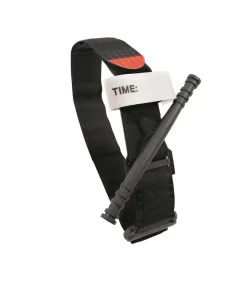
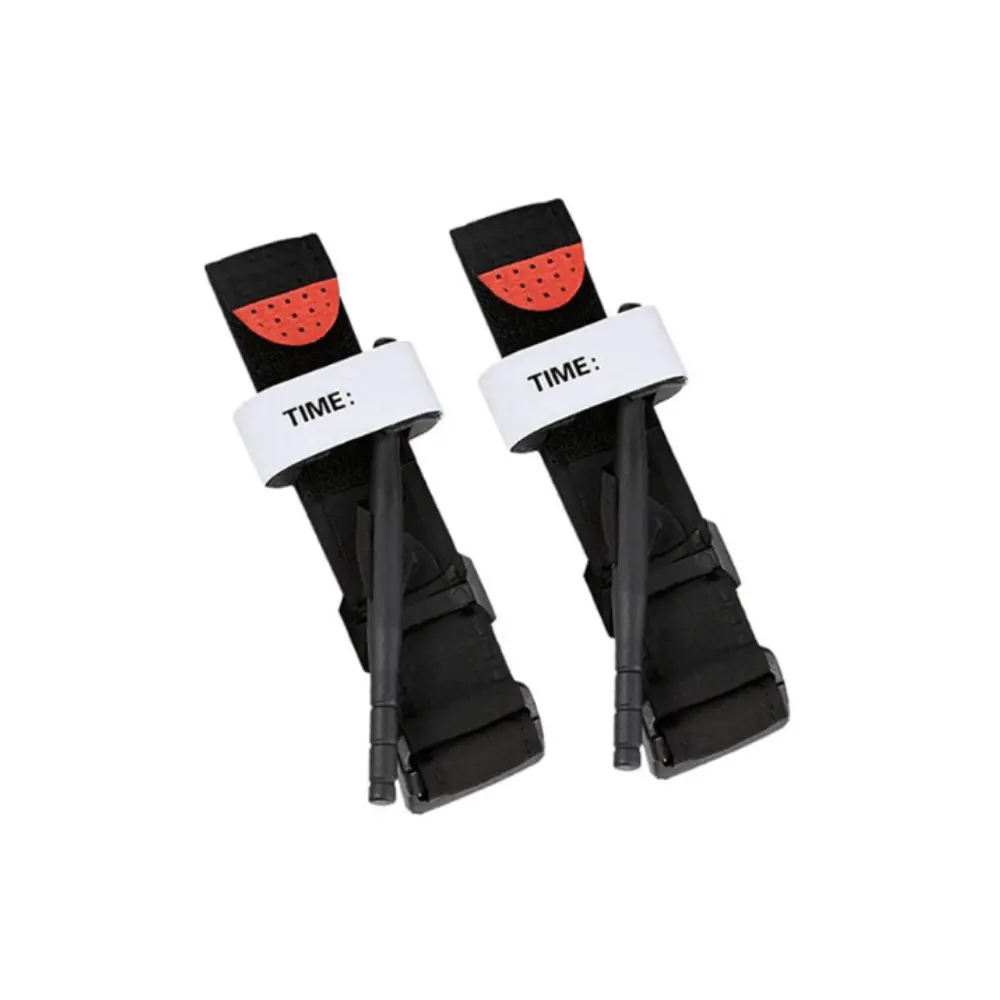
Stop life-threatening limb bleeding in seconds. Our windlass tourniquet is used by first responders, workplaces, schools, and prepared Canadians every day. Moreover, it works with just one hand — so even in a crisis, you can apply it on yourself in under 30 seconds. Browse our full range of first aid supplies to build a complete emergency kit.
- ✅ One-handed windlass application — no help needed
- ✅ Writeable time tab for safe handoff to medical professionals
- ✅ Reinforced windlass clip — holds pressure during transport
- ✅ 950mm nylon strap — fits all adult arms and legs
- ✅ Ships from Canada · Fast delivery to Canada & US
- ✅ From $5 · Bulk pricing available for teams and workplaces
The Best Tourniquet for External Bleeding in Canada
Heavy bleeding from an arm or leg can be fatal in under five minutes. Fortunately, the right tourniquet stops that bleeding fast — before help even arrives. Our EMS Shop windlass tourniquet is built for both trained professionals and everyday people, because emergencies do not wait for experts. Whether you work in construction, coach a sports team, go hiking, or simply want to be ready at home, this is one of the most useful tools you can own. It is also one of the most affordable, starting at just $5 per unit.
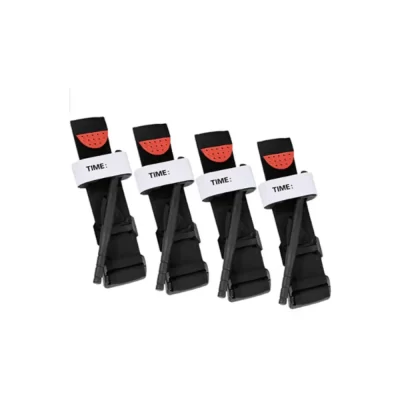
Pair this tourniquet with our complete first aid kits for a full bleeding control solution at home, in your vehicle, or at your workplace. Together, these products give you everything you need to respond to a serious injury before paramedics arrive.
Key Features That Make This Tourniquet Stand Out
One-Handed Application — Apply It on Your Own
Most emergencies happen fast and without warning. That is why this tourniquet uses a windlass mechanism with a single-routing buckle, so you can apply and tighten it with only one hand. Even an injured person can treat themselves without waiting for someone else. In fact, with a little practice, the whole process takes under 30 seconds from start to finish.
Red-Tip Threading — No Fumbling Under Pressure
The red elliptical tip guides the strap through the buckle quickly and clearly. Even in low light or a high-stress situation, the bright colour shows you exactly where the strap needs to go. As a result, there is no guessing, no fumbling, and no time lost when time is the one thing you do not have.
Writeable Time Tab — Key Information for Paramedics
When paramedics or ER staff take over, the first thing they need to know is when the tourniquet was applied. For this reason, a built-in writeable tab lets you record the time with any pen or marker. This small detail can directly affect the level of care the patient receives, so it is far more important than it looks.
Reinforced Windlass Clip — Holds Firm During Transport
Once tightened, the windlass locks into a reinforced clip. Because of this, the pressure stays consistent even while the patient is being moved to an ambulance or vehicle. There is no slipping, no loosening, and no need to re-tighten in the middle of a crisis.
950mm Nylon Strap — Fits Every Adult Arm and Leg
At 950mm (37.4 inches) stretched and 38mm (1.5 inches) wide, this strap fits all adult limbs easily. Moreover, the high-strength nylon holds under extreme tension without fraying or snapping. So whether you need it on a large leg or a slender arm, it works just the same.
Watch: How to Apply a Tourniquet Correctly
Seeing the steps in action makes them much easier to remember. Watch the short video below to learn the correct technique and, just as importantly, the common mistakes to avoid. Being prepared before an emergency happens is always the best approach.
How to Apply This Tourniquet — 4 Simple Steps
Applying a tourniquet is straightforward once you know the steps. However, the best time to learn them is now — not during an emergency. The Stop the Bleed program recommends practising with your tourniquet at least once before you ever need to use it for real.
Step 1 — Place It 2 to 3 Inches Above the Wound
Slide or wrap the tourniquet around the limb, placing it 2 to 3 inches above the bleeding wound. Crucially, never place it directly over a joint like the knee or elbow, because this stops it from working properly. The upper arm or upper thigh are both ideal positions for most injuries.
Step 2 — Pull the Strap Tight
Thread the red tip through the buckle, then pull the strap firmly to remove all slack. At this point, the strap should be flat and snug against the skin with no loose material. Once it feels tight, you are ready to move to the next step.
Step 3 — Twist the Windlass Until Bleeding Stops
Rotate the windlass rod until the wound stops bleeding completely. Keep twisting even if it feels very tight — the goal is to stop all blood flow, not just reduce it. Only once the bleeding has fully stopped should you move on to securing the windlass.
Step 4 — Lock, Record, and Call for Help
Secure the windlass in the locking clip so the pressure stays in place. Next, write the exact time of application on the writeable tab using a pen or marker. Finally, call 911 right away and keep the patient as still and calm as possible until help arrives.
Medical Disclaimer: Only use a tourniquet on arms and legs. Never apply it to the neck, head, or torso. Always call for emergency medical help as soon as possible. For more guidance, visit the Canadian Red Cross first aid resources page.
Who Needs a Tourniquet?
Most people think tourniquets are only for soldiers or paramedics. In reality, however, the majority of severe bleeding emergencies happen to everyday people — at work, at school, on the road, or out in nature. Because of this, health authorities across Canada and the United States now recommend that anyone can and should know how to use one. According to Health Canada, bystander action in the first few minutes of a bleeding emergency is one of the most important factors in survival.
EMS & First Responders
Paramedics, firefighters, and police officers all depend on fast and reliable bleeding control when they arrive at a scene. Moreover, our bulk pricing makes it easy for departments to stock every vehicle, bag, and station without going over budget. Browse our bulk tourniquet packs to find the right option for your team.
Workplaces & Construction Sites
Canadian occupational health and safety rules require first aid readiness at all high-risk job sites. As a result, many safety managers across the country now include tourniquets alongside standard bandages and kits. At just $5 per unit, the cost is minimal — but the value in a serious accident is enormous. The Canadian Centre for Occupational Health and Safety provides clear guidance on first aid requirements for employers.
Schools & Sports Teams
The Stop the Bleed program is growing rapidly across Canadian schools, and for good reason. Therefore, coaches, athletic directors, and school administrators are adding tourniquets to their first aid bags and nurse’s offices. Even older students can be taught to use one correctly in under five minutes, which makes it a practical tool for any school environment.
Outdoor Activities, Hunting & Camping
When you are far from the nearest hospital, a tourniquet is not optional — it is essential. Besides taking up almost no space in a pack, it weighs next to nothing, so there is really no good reason to leave it behind. Whether you are hiking, hunting, fishing, or camping, this is the one piece of safety gear that could make all the difference.
Vehicles & Home Emergency Kits
Car accidents are among the most common causes of severe limb injuries in Canada. For this reason, keeping a tourniquet in your glove box is just as sensible as keeping a spare tire. Similarly, every home first aid kit should include one, especially if you have children, elderly family members, or anyone doing hands-on work around the house. Check out our first aid kits to find a complete home emergency bundle.
Medical Training Programs
Trainers running Stop the Bleed courses, TCCC classes, and workplace first aid certifications need units that students can practise with repeatedly. Furthermore, our low per-unit price on bulk orders makes it practical to put a tourniquet in every student’s hands during a session, rather than passing one around the room.
Product Specifications
| Design | One-handed windlass with single routing buckle |
| Strap Material | High-strength nylon webbing |
| Stretched Length | 950 mm (37.4 inches) |
| Strap Width | 38 mm (1.5 inches) |
| Windlass | Reinforced polymer with locking clip |
| Time Tab | Writeable security tab included |
| Application | Arms and legs only — not for neck, head, or torso |
| Package Contents | Tourniquet(s) + English instruction manual |
| Shelf Life | No expiry when stored unused in dry, dark, cool conditions |
| Available Packs | 1-pack · 2-pack · 4-pack · Bulk 10-pack |
| Ships From | Canada — all provinces & United States |
Frequently Asked Questions
When should you apply a tourniquet?
Apply one right away when heavy bleeding from an arm or leg cannot be stopped with direct pressure. Place it 2 to 3 inches above the wound, then tighten until all bleeding stops. Do not wait — serious blood loss can become life-threatening in just a few minutes.
Can this tourniquet be applied with one hand?
Yes — the windlass design with single-routing buckle lets you apply and tighten it with only one hand. As a result, it works even when the other arm or hand is injured. This makes it one of the most practical options available for self-rescue situations.
How long can a tourniquet safely stay on?
Keep it in place until a trained medical professional takes over. Write the exact time of application on the writeable tab so that paramedics have that key information. Never remove it yourself while still in the field — always leave that decision to a medical professional.
Does EMS Shop ship to the United States?
Yes — we ship quickly to all Canadian provinces as well as to the United States. In most cases, orders leave our warehouse the same or next business day.
Is bulk or wholesale pricing available?
Absolutely. We offer tiered pricing for workplaces, schools, fire departments, and training programs. The 10-pack gives you the lowest price per unit. For orders of 50 or more, simply contact our team for a custom wholesale quote.
Does this tourniquet have an expiry date?
When stored unused in a dry, dark, and cool space, it has no set expiry date. However, it is still a good habit to check it regularly for wear, discolouration, or sun damage. Replace it if anything looks wrong or the material feels brittle.
| Weight | 1 kg |
|---|---|
| Dimensions | 10 × 10 × 10 cm |
Related products


&url=https://emsshop.ca/product/tourniquets-1-pack/&media=https://emsshop.ca/wp-content/uploads/Tourniquets-800x800.webp)